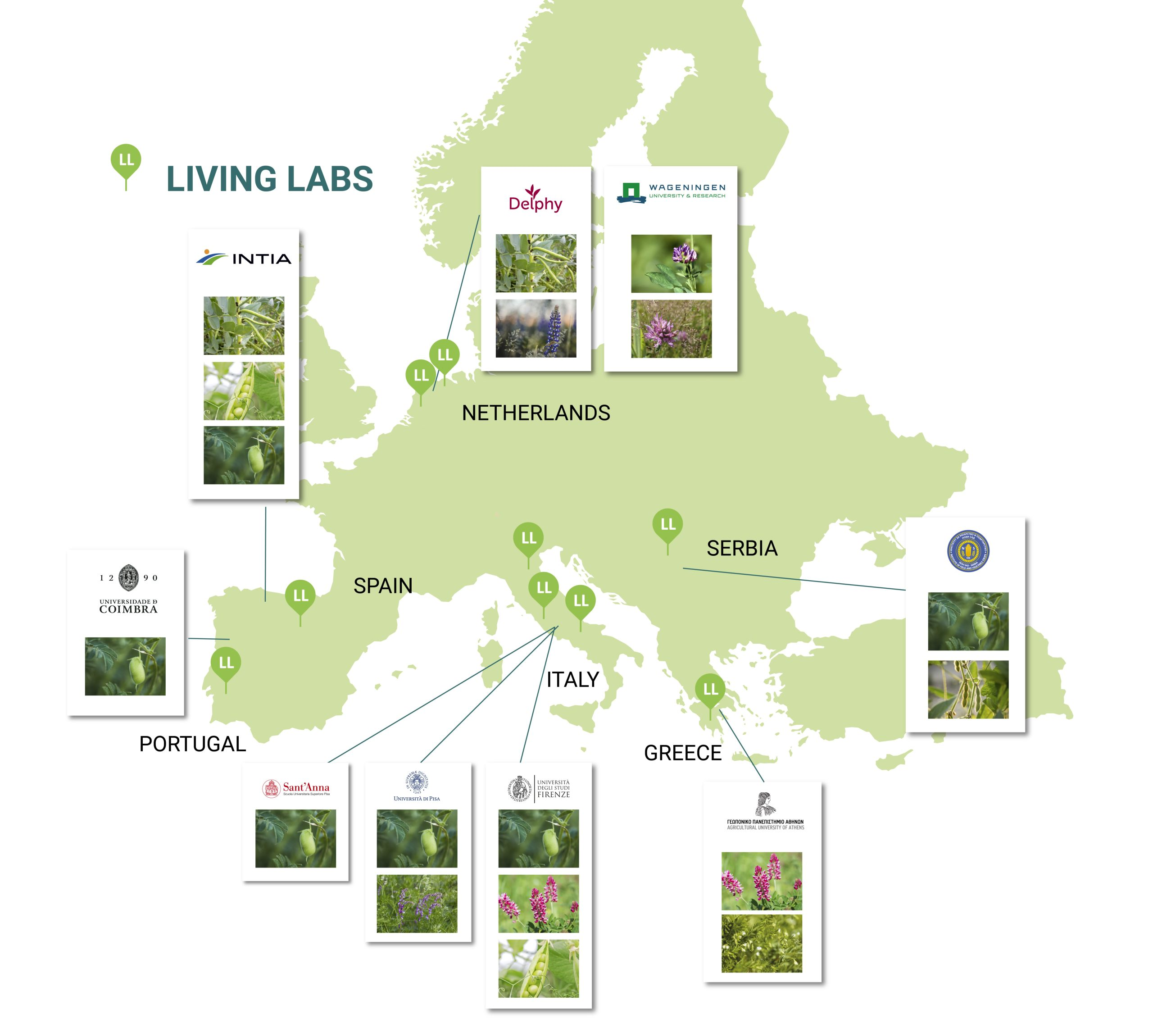
Greece LL
Farm
The demo farm hosts a three-year field trial (2024/25-2026/27) arranged as a strip-plot randomized complete block design with three replications. The experiment includes 105 subplots of 12 m² each, corresponding to a net experimental area of 0.13 ha. The trial evaluates five weed-management treatments across seven crop-rotation schemes involving lentil, durum wheat, sulla, and maize. Two lentil cultivars are included, Samos and Dimitra. Particular features of the demo include intercropping treatments, cover crops based on oat and mustard mixtures, no irrigation, and a previous crop of cotton.
Audience
Description
researchers, farmers, advisors
Number of Audience
- 20 people (5 farmers, 7 advisors, 8 researchers)
Preparation
Objective
The objective of the demo event is to present the second-year experimental field of the Valereco project and provide participants with an overview of the experimental design, field practices, and preliminary results from the first year of implementation. The event also aims to demonstrate the use of drones, field measurements, and sensor-based tools for crop monitoring, while promoting knowledge exchange between stakeholders on the practical challenges and opportunities related to legume cultivation in the wider region. Through field demonstrations, open discussion, and interaction with producers, the event seeks to strengthen the link between research and on-farm application.
Topic
The demo event focused on the role of grain and forage legumes, particularly lentil and sulla, within diversified arable cropping systems. Emphasis was placed on legume-based crop rotations, intercropping, cover crops, and weed-management strategies, as well as their contribution to ecosystem services such as weed suppression, soil fertility improvement through biological nitrogen fixation, crop diversification, and reduced reliance on external inputs. Sulla was presented as an important forage legume with potential value in Mediterranean systems, both as a rotational crop and as a species contributing to soil fertility and cropping-system resilience. The event was linked to the Valereco experimental field, where lentil, durum wheat, sulla, and maize were included in different rotation schemes under rainfed conditions. It was mainly addressed to arable farmers, especially those interested in introducing or improving legume cultivation in the wider region, as well as advisors, researchers, and other stakeholders involved in sustainable crop production.
Target audience
The target audience includes local farmers and agricultural stakeholders interested in sustainable crop management and soil improvement.
Set-up
The event was organised as a field demo/open day, combining a guided field visit, practical demonstrations, and open discussion with participants. The event started with the arrival and welcome of participants, followed by a short introduction to the Valereco project and its objectives. Participants then visited the experimental field, where the experimental design, crop rotations, treatments, and weed-management practices were explained directly in the field. A key part of the event focused on the use of drones in the project, including field measurements, sensors, and a live drone flight over the experimental plots. This practical demonstration helped show how digital tools can support crop monitoring and field assessment. Interaction was encouraged through questions, informal discussion during the field visit, and an open exchange with farmers and stakeholders. The final part of the event focused on the challenges of cultivating legumes in the wider region, preliminary findings from the first year, and discussion with producers. Overall, the event had a practical and participatory format, linking research activities with farmers’ experiences and local production challenges.
Involvement Living Lab Board
The Living Lab Board was actively involved in the preparation by helping us identify the most pressing regional challenges in legume cultivation to address during the event. Additionally, board members played a key role in mobilizing their networks to invite local farmers who have a genuine interest and experience in lentils.
Delivery
Overview
May 14 2026, AUA organised a field day in the Greek Living Lab of the project.
In total there were about 20 participants with farmers researchers and advisors.
Programme
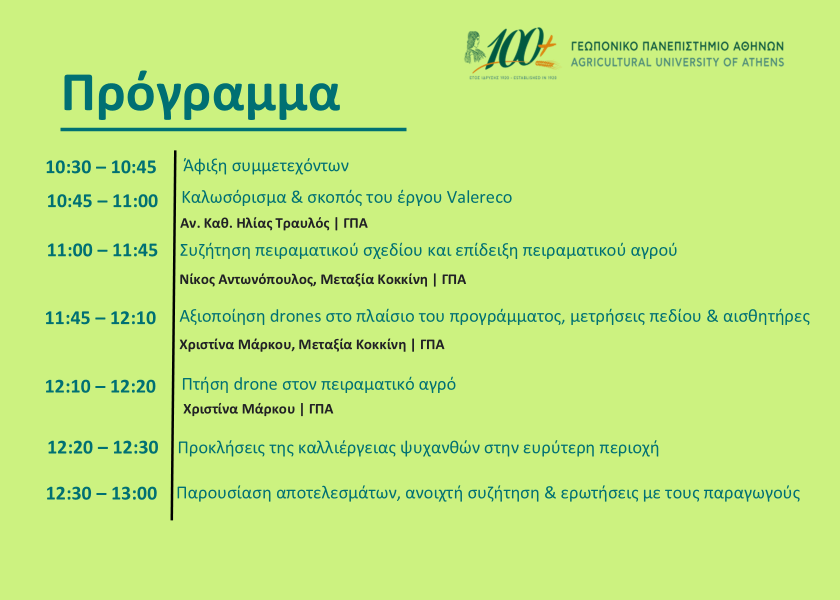
The field day event was structured as a half-day programme, starting at 10:30 with the arrival of the participants. It began with an official welcome and an introduction to the scope of the Valereco project, presented by Assoc. Prof. Ilias Travlos. Following the introduction, a 45-minute session was dedicated to discussing the experimental design alongside a guided demonstration of the project's experimental field. The programme then transitioned into the technology showcase, highlighting the utilization of drones within the project, field measurements, and sensors. This session was followed by a live drone flight over the experimental plots. The final part of the event focused on the practical and regional aspects of the research, starting with a presentation on the challenges of cultivating legumes in the wider area. The day concluded with an open presentation of results, followed by an interactive, open discussion and a Q&A session with the attending local producers.
Participant experience
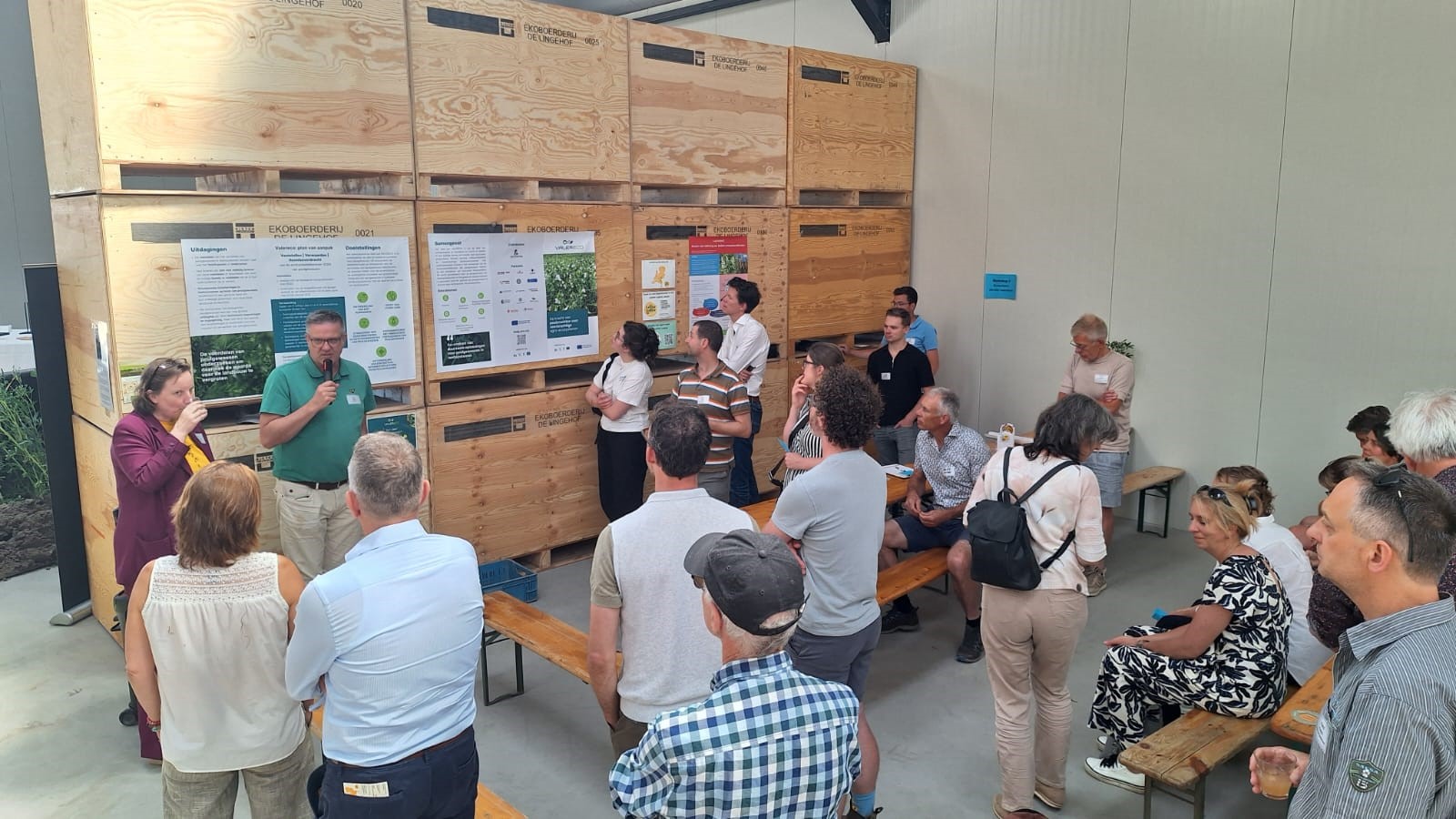
During the field day, participants visually inspected the layout and growth of the second-year lentil, sulla and other plots, and watched a live drone flight operating directly over the experimental field. They were able to walk through the plots to physically touch the plants and the soil, while also getting a close-up look at the agricultural sensors used for data collection. Finally, the farmers experienced a highly collaborative environment where they actively participated in a hands-on Q&A session and an open forum, directly engaging with researchers to discuss first-year results and share their own practical insights on regional legume cultivation challenges.
Facilitation
Interaction was facilitated by hosting the event directly in the field, moving away from a traditional lecture format. We encouraged producers to walk through the plots and inspect the crops firsthand, which naturally sparked immediate questions during the guided tour. Furthermore, the live drone demonstration served as an interactive tool for a real-time Q&A session, culminating in an open-circle discussion where farmers actively debated regional legume challenges and shared their practical insights alongside the first-year results.
Results
Evaluation summary
Feedback from the attending farmers indicated high satisfaction with the event’s practical focus. Participants highly valued the relevance of the trial, noting that focusing on the soil health benefits of lentils and sulla addressed critical needs for regional crop rotation.
The live drone flight and sensor demonstration were rated as highly innovative and clear. Farmers expressed strong interest in how aerial data correlates with field management, achieving the event's objective to effectively raise awareness about digital agriculture tools.
The field-based, open-circle discussion format was praised for being accessible and collaborative. Participants appreciated the opportunity to directly engage with the researchers from the Agricultural University of Athens and valued the horizontal exchange of experiences regarding local legume cultivation challenges.
The evaluation showed that the event successfully built confidence among the local farming community, with several farmers expressing intent to apply the discussed crop management practices and further monitor the project's second-year results.